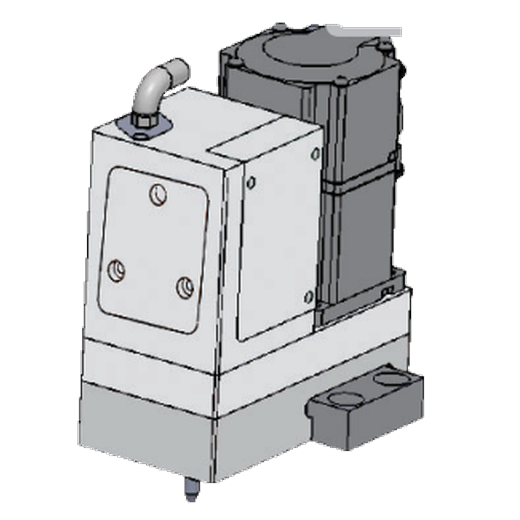
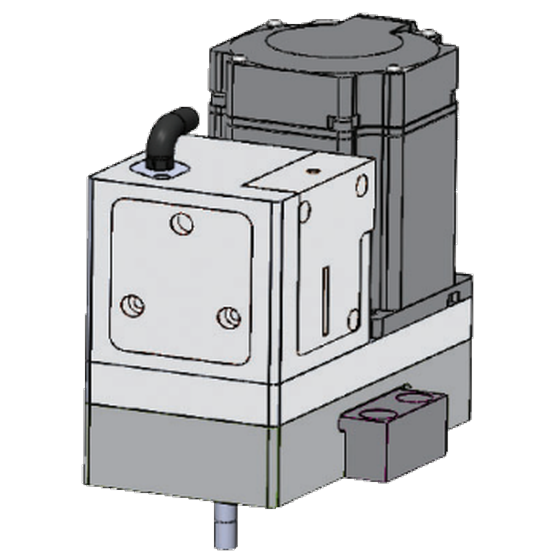
The right model choice depends on thread range, material, center distance and torque need. This guide offers a practical checklist that makes the decision between the AR340 and AR810 easy.
Quick decision table
The general rule is simple: the AR340 for small threads and tight center distances, the AR810 for wide thread ranges and high torque. But the final decision is set by material and part geometry.
| Feature | AR340 | AR560 | AR810 |
|---|---|---|---|
| Thread Range | M3–M4 | M5–M6 | M8–M10 |
| Pilot Drill Ø | 2.80–3.70 mm | 4.65–5.55 mm | 7.40–9.30 mm |
| Power (Motor) | 400 W | 400 W | 750 W |
| Tap Speed | 3000 rpm | 1460 rpm | 2500 rpm |
| Stroke (X) | 13–17 mm | 18–20 mm | 22–25 mm |
By thread range
With its compact body the AR340 is ideal for the M3–M4 range in tight center-distance progressive dies. The AR810 covers the M8–M10 range and is built for wider, more powerful applications.
- M3–M4 · tight space → AR340
- AR560 — medium threads, balanced speed
- M8–M10 · high torque → AR810
- Thin sheet · small thread → AR340
- Thick sheet · chassis part → AR810
Torque and material
Forming threads in hard, thick materials needs more torque. The AR810's 750 W servo gives stable performance on demanding materials like stainless steel and thick sheet. The AR340's 400 W is enough for aluminum and thin steel.
Selection checklist
Before deciding, clarify these four points: target thread size, material type and thickness, center distance in the die, and required cycle speed. With this the right model almost picks itself.
Not sure?
Share your thread range and material; our engineer will propose the right model and an installation plan the same day.